
How to Prove a Solar Module Warranty Claim: A Shattered Glass Case Study
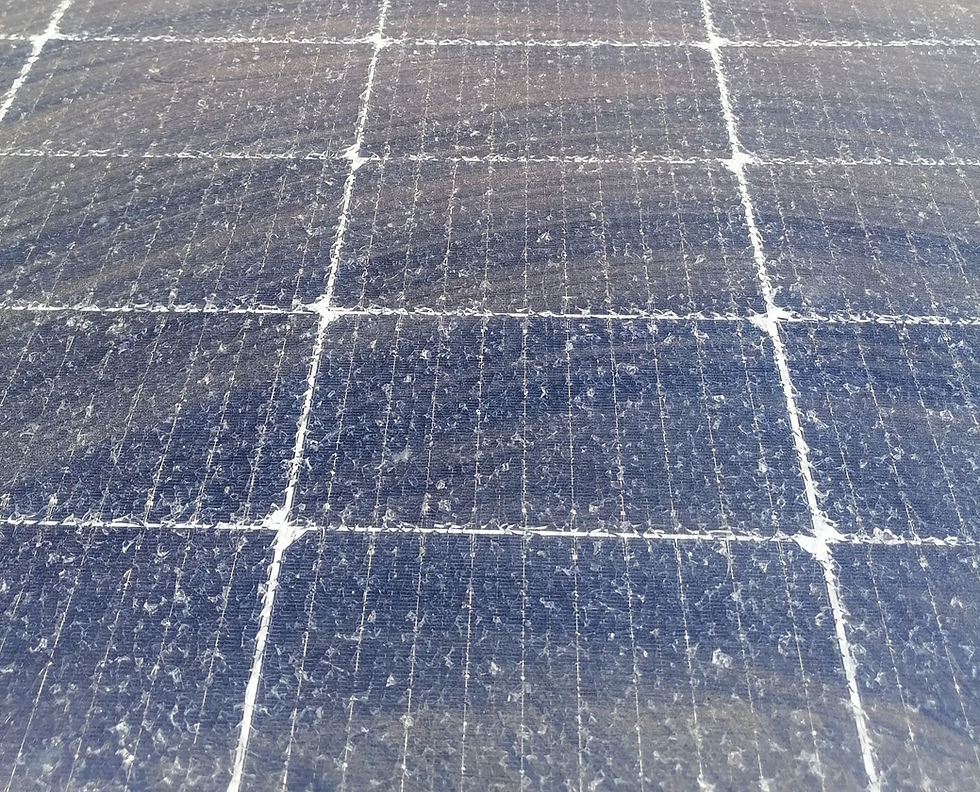
When a solar panel suffers front glass breakage, many asset owners assume the manufacturer will automatically blame external factors like stones or weather and deny the claim. However, with the right engineering data, it is entirely possible to prove installation compliance and secure a successful resolution. In modern solar asset management, proactive monitoring and structured data are essential to protect your financial returns when hardware fails.
This technical field report outlines how a routine maintenance inspection by the Avishakti team identified a compromised string, isolated a shattered module, and successfully settled a commercial warranty claim with a tier-1 global manufacturer.
Why does a single damaged solar panel drop the voltage of an entire string?
Rooftop solar modules in a series string behave exactly like links in a chain—even a single faulty module will drag down the performance and voltage of the entire circuit. When a panel's front glass shatters, it alters the physical and electrical integrity of the laminate by introducing microcracks in the solar cells, opening paths for moisture ingress, increasing internal resistance, creating leakage current to the ground, and causing partial cell isolation.
During a routine quarterly inspection at a commercial plant commissioned in March 2022, our technicians recorded an electrical abnormality at the DC MCB level of a specific string.
The system utilizes 540 Wp class JinkoSolar modules (JKM540 series). Let's look at the basic math our engineers used to detect the anomaly:
Individual Module Open Circuit Voltage (Voc): ~49–50 V
Individual Module Maximum Power Voltage (Vmp): ~41–42 V
Expected String Voltage (18 Modules in Series): 18 × 41.5 V ≈ 747 V (Vmp) / 18 × 49.5 V ≈ 891 V (Voc)
While all adjacent strings registered normally within this expected range, the affected string displayed a significantly lower voltage under identical environmental conditions. This electrical deviation was our primary indicator of an internal string failure.
How do you verify and isolate a faulty solar module?
Before jumping to conclusions, a disciplined troubleshooting methodology must be followed to rule out simple measurement or termination errors. Our team executed a three-tier electrical and physical verification process:
Electrical Validation: Voltage readings were rechecked using a digital multimeter, adjacent string baselines were verified for comparison, and all polarity and termination points were double-checked. The low voltage persisted, proving the issue was localized inside the string.
Systematic Physical Inspection: Technicians inspected every module in the string looking for cracks, shattered glass, cell discoloration, impact marks, or heavy localized shading. This led directly to the identification of one module with shattered front glass.
Mechanical Structure Assessment: To eliminate the possibility that installation stress or wind load caused the fracture, we checked the mounting clamps for tightness, verified frame alignment, and confirmed bolt torque conditions. The structural infrastructure was 100% compliant and flawless.
What documentation do manufacturers require to approve a solar warranty claim?
Global Tier-1 manufacturers (in this case, Zhejiang Jinko Solar Co., Ltd.) evaluate multiple technical criteria before approving a shattered glass claim. They specifically look for manufacturing defects versus transport or installation mishandling.
To build an unarguable case, the Avishakti team generated a technical evidence package including:
Unassailable Electrical Evidence: Digital multimeter proof of the low string voltage showing exact performance degradation.
Physical Asset Tracking: Clear photographs of the module model, serial number tags, and close-ups of the shattered glass pattern.
Compliance Documentation: Detailed records of our quarterly maintenance history and torque verification sheets to prove the system was never mishandled.
Supply Chain Tracking: Original purchase and ownership records bridging the claim between the original purchaser (Proinso UK Ltd) and the asset owner.
The Settlement: What is the outcome of a successful solar warranty claim?
Because our internal technical reporting was airtight and established absolute credibility, the manufacturer validated the claim under their limited warranty terms. The claim was settled with a direct refund approval of USD 156 for the single compromised module.
While a single-panel settlement may seem small, imagine the financial drain if multiple undetected, damaged panels are allowed to suppress string voltages across a large commercial rooftop asset for months or years.
Key Takeaways for Commercial Solar Asset Owners
Routine testing is a financial shield: Basic visual checks miss microcracks, but systematic voltage comparisons at the DC MCB level catch them immediately.
Data wins claims: Manufacturers will reject claims without deep technical documentation. Having an engineering-led MAC provider ensures your claims are actually paid.
Are your solar warranties actively being managed? Most AMC providers just wash panels and ignore the data. Contact Avishakti Rooftop Solar today to transition your asset to a standard-compliant, engineering-first Maintenance and Asset Management (MAC) contract.


Comments